
‘Caregiver Kiosk’
Time Length:
3 Months (January to April)
Tools
- Figma & Figjam
- Slack & Jira
- Optimal Workshop
Team Members:
- Eddie Bissell Simmons
- Emily Chau
- Laynol Eap
- Caleb Nolet
- Jagdeep Singh
- Olga Steblyk (Me)
Project Details
Teaming up with St. Joseph’s Long Term Care, our team dives deep to learn more about long term care homes, to discover more about the environment and the people there. Working with the community to find a practical and impactful solution to improve their experiences as caregiver’s.
We acknowledge that situations like these, there are no solutions but are ways to alleviate challenging feelings and emotion that arise.
Objective
“Finding an innovative solution to enrich the experiences of caregivers and family members of residents at St. Joseph’s Lifecare Centre“
Our Impact
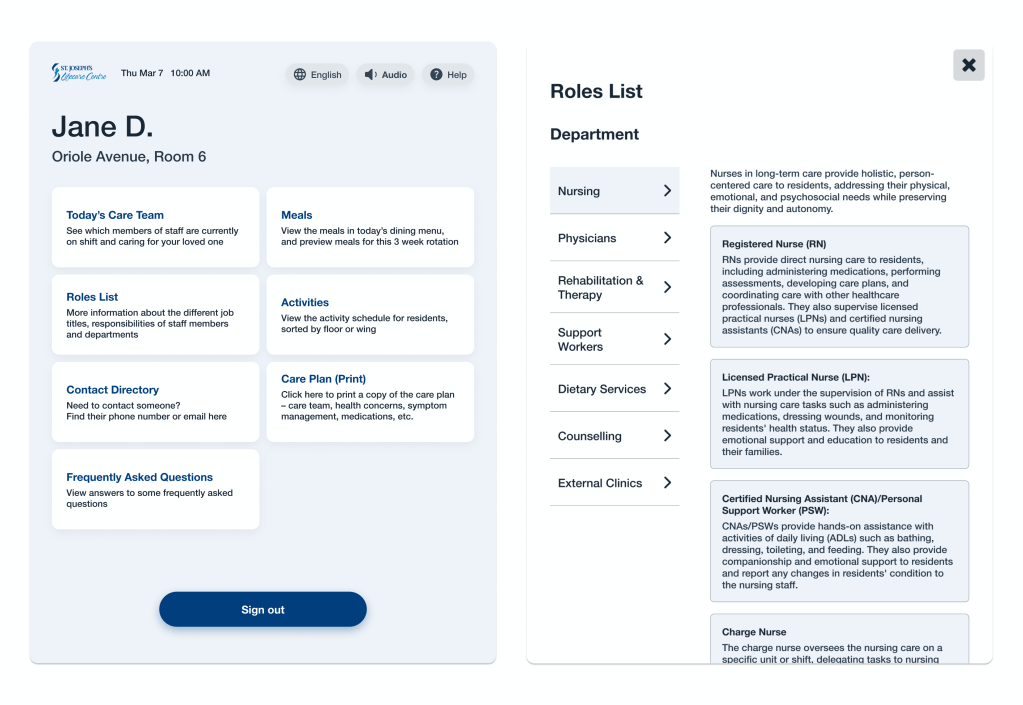
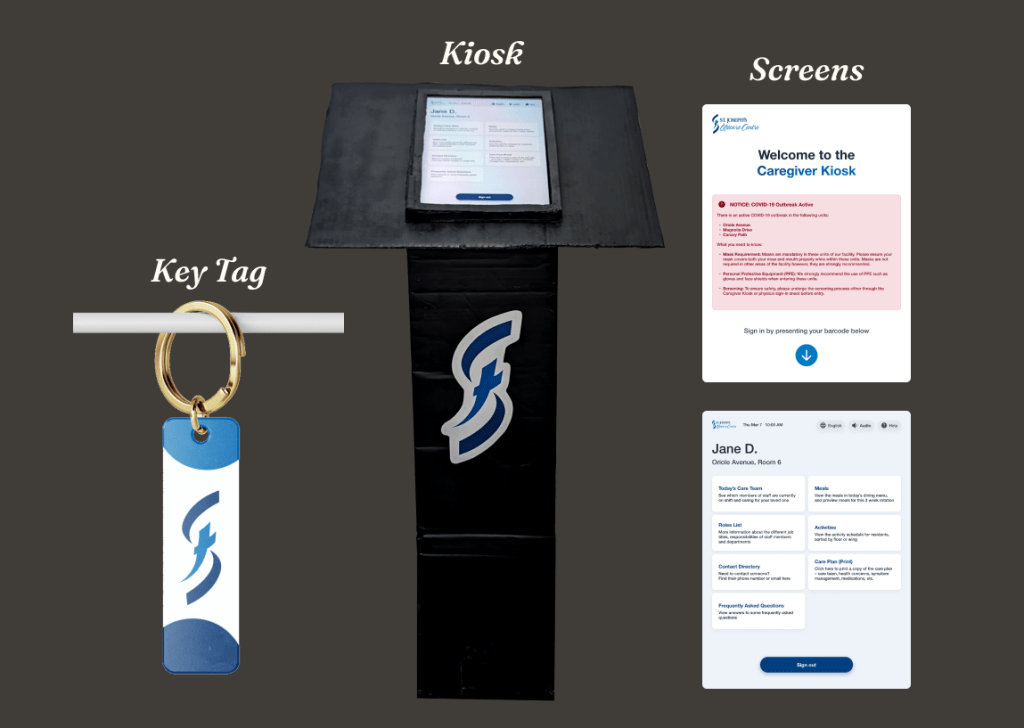
Our team wanted to create something that would be helpful and imporve aspects that impact the experience of family and caregivers the most. Which including a kiosk that acts as a centralized information hub, with a key tag lets the caregiver check on information of their loved one.
Research
‘Horses & Zebras’
Competitive Analysis
When looking into the ‘competitors’ to St.Joesph’s to see what they do in a similar scope of the same problem, we additionally looked into ‘indirect competitors’ which by our metric would be summed up below;
“Instances where the care of a loved one is relinquished (to some degree) into the hands of a facility or organization and, Where a support channel exists between a loved one and their caregiver and/or family”
In our research, we kept a consideration for additional perspectives that would be relevant to the project such as caregivers that have experience with the role of caregiver, holding or formerly held, this includes participant involved and not involved in St. Joseph’s LTC.
Our metric to look in to what the competitors do in three categories: Postive Aspects, Negative Aspects & Best and Common Practices.
Direct Competitors – ‘Horses’
- Carolettes Villa
- John Nobels
- BrierWood Gardens
- Sienna Senior Living
Indirect Competitors – ‘Zebras’
- Prison Research
- Military
- Education & Childcare
- Mental Health & Rehab
- SickKids
Summative Research
Interviews; n=14
Conducted 14 ‘one-on-one‘s, gathers insights and verbal records of feelings, emotions, and opinions that felt important to share as caregivers.
Focus Group; n =6
Comprised of three activities (Emotional Response Cards, Group Discussion, & SWO Analysis); the focus group brought in new perspectives that impacts each other and provided.
Literature Review; n=14
Academic sources and literature that provided different findings regarding the topic of caregivers and further research in to their experiences concerning such a role.
Prior Survey Data; n =185
Though this methodology was not executed by our team, we did take a look at statistics and to see what questions were being asked.
Points to Make
Thematic Analysis
We conducted a thematic analysis for each research methodology we employed. To organize the information, we coded each of the data sets with either using interpretive or descriptive codes, which were later sorted in to their appropriate sets of groups or pairs. With the information being confidential and private, the name of the groupings will be listed as follows:
- About the Caregivers, their feelings and emotions
- Onboarding, what experiences were positive and negative
- Communication, what were the methods, who did you speak to, and what problems did you face
- Family Council at St. Joseph’s LTC
- Issues and Concern that family and caregivers had at St. Joseph’s
- And General Information about being a caregiver
Functional Requirements
- TRANSPARENCY; Should be in line with St. Joseph’s current methods of communication and be transparent in nature
- INFORMATIVE; Enables them to know what recreational programs, social events, and religious services the resident participates in and the technical details
Constraints
- BEYOND DIGITAL METHODS; Must not only depend on a digital device cannot create additional responsibilities for caregivers, loved one or staff member
- CONFIDENTIALITY & RESPECT; Data privacy and the confidentiality of residents’ personal information and also cannot clash with privacy acts and legislation
Defining Research
Personas
The Advocate
- Loved one unable to voice own needs
- Helpless when staff don’t respond to inquiries
- Struggle to build relationships with frequently changing staff
The Initiate
- New to LTC
- Unfamiliar with LTC
- Especially who to contact
- Emotional struggle to relinquish care
The Protector
- Not able to visit as frequently
- Worries about ensuring proper care
- Struggle establishing connections with frequently changing staff
The Busy Bee
- Working full-time
- Struggle to balance responsibilities
- Values good staff relationships with staff and clear communication
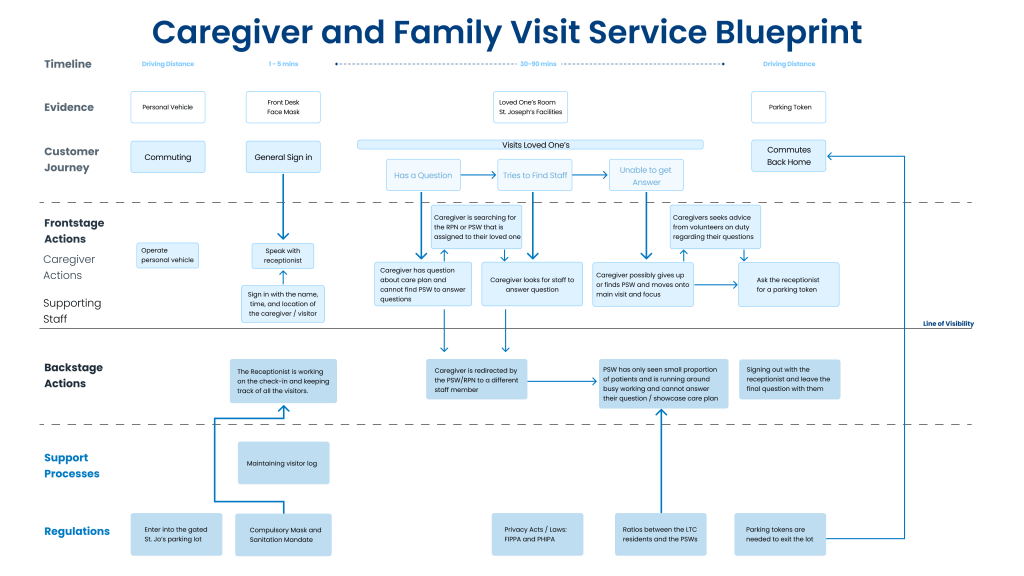
Service Blue Print
Idea Thus Far
So far, referencing our research both inside St. Joseph’s and outside, out team came up with a board concept.
Digital Display:
To display dynamic and frequently changing information, such as: staff on shift, resident care plan, & schedule
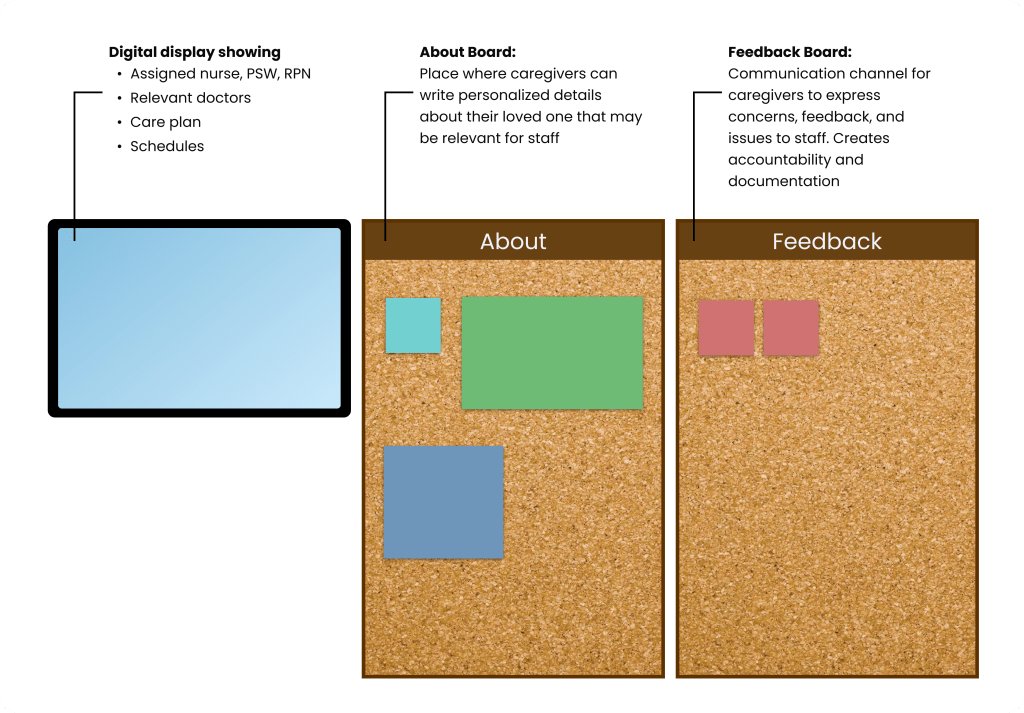
About Board:
Enables to add more personalized items such as photos, craft and anything that can be pinned that the resident or family would want.
Feedback Board:
Communicate issues and other points of concern to staff, which the caregiver or resident would fill out a form stating their concern.
Pivot!
With more contextual information provided about how St. Joseph operates, our initial solution had to be changed. Additionally, we realized that:
- Our client’s needs differ from our user group’s needs, with different experiences and interactions
- Taking a step back. This helped us reassess the direction that we are taking in the project
- Talk. It. Out! Team members were able to include additional insights in to what and where we wanted to take the project.
Ideation
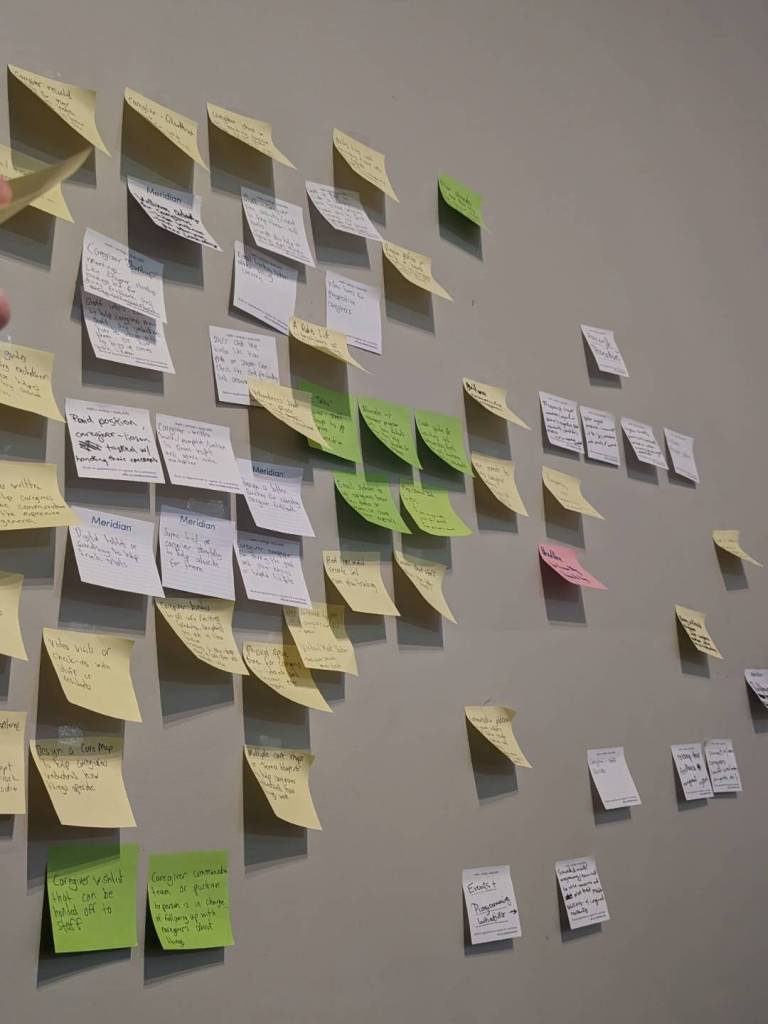
Talking into account the feedback from our clients, user group and professor, we took a step back to recuperated our thoughts and research collected. This enabled us to hone in on the dynamic aspects of information that improves the experiences of the caregivers.
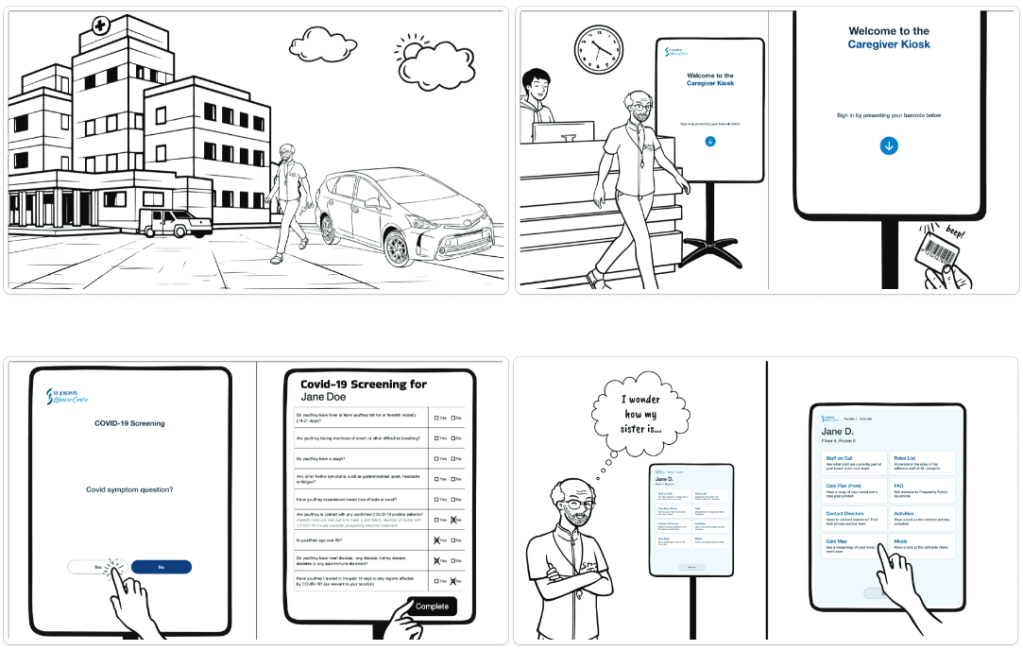
Storyboards; n=5
This testing was able to gather research about the initial proportion of the solution and to get honest opinions regarding the kiosk.
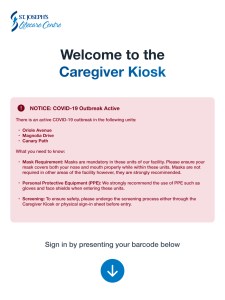
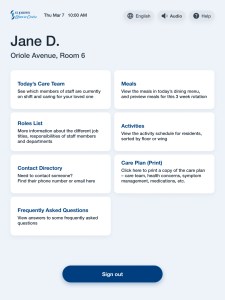
Usability Tests; n= 6
Usability testing was able to provided user data and insights how caregivers would use the kiosk and what changes would be needed to implemented.
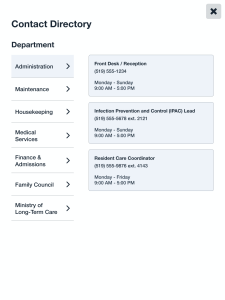
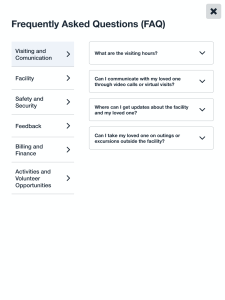
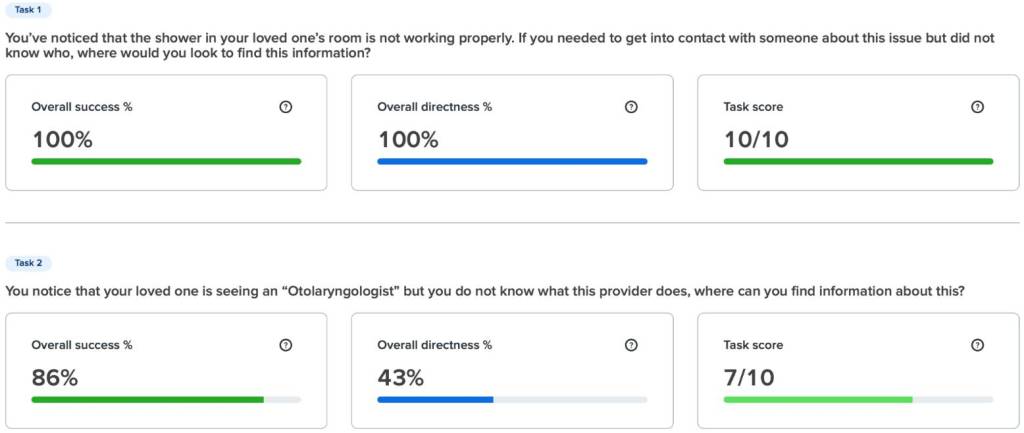
Information Architecture; n= 7
Fixing the taxonomy and structure with tree testing and card sorting.
Final Prototypes
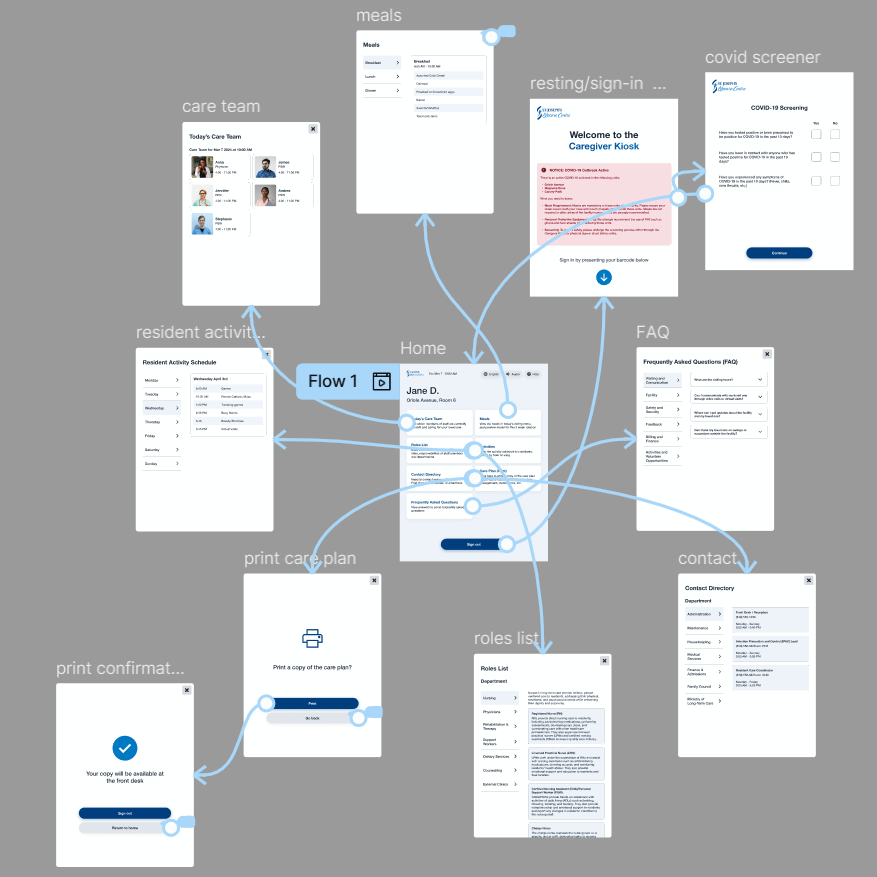
After getting the feedback and correcting to the new adjustment, we created the final prototype of the kiosk’s screens.
Click here to see the figma prototype of the screen.
Moving foward
The implementation can be divided into a 3-stage plan that would comfortably introduce the ‘caregiver kiosk’ into the LTC environment.
Stage 1. Preparation
- Research & development
- Fundraising
- Vendor selection
- Installation
Stage 2: Training
- Introduction to staff
- Workshop tutorials with Family Council
Stage 3: Rollout
- Pilot / soft launch
- St. Joseph’s wide adoption
Conclusion and Presentation
In our final phases of the project, we presented the solution to our clients, classmates and professors in order to judge and in our competitive ranking to our classmates. With the satisfaction of our clients by our solution and explanation, team LUX was placed 1st in the competition between other groups.
Reflection
Boiling down some of the key take aways that I learned from this project, I get to consider where I am now and what awaits me in the future
- Ultimately people just want to be understood and heard
- Project management is part of the process
- Going back is needed to move forward
Additionally, thank you to my team and St. Joseph’s Long Term Care home for this experience.
 Olga Steblyk